Six tutorials per class
Six assignments per class
Personalized critiques
Class discussions
NEXT CLASS:
September 3-October 31, 2010
2 months, 6 different tutorials, 6 assignments, critiques by the
instructor and by your fellow students. Packed full of instruction with lots of discussion
about technique, composition, exposure, lenses, gadgets etc., especially as they relate to the
current tutorial.
REGISTRATION - $180
The registration window is open now through the first two weeks of each
class.
$180 per class. Register online at our
online store or call Carol Leigh at
(541) 563-3834 to register over the phone.
NEW!
WANT TO AUDIT THE CLASS? $95
You'll enjoy the benefits of the class, all the instruction, the lessons,
the discussions, the tips, the camaraderie, etc. You can also post your
photos and receive comments (not critiques). Just $95 to audit the
class.
LIMITED TO 8 PHOTOGRAPHERS
Once you're registered, you'll
receive information on how to access the class, what you'll need, how to
prepare your photos for viewing, etc.
PREREQUISITES
- Access to the Internet.
- If you're a film
shooter, you'll need some way of converting your slides or prints to
JPEGs so that they can be shown online.
- If you're a digital
shooter, you'll need some way of sizing your photos to show them online
as JPEGs.
- Any focal length lens
will work fine. Really. There may be times, however, when you'll want to
move in closer to your subject. A
macro lens is great, but you can easily use extension tubes on whatever
lens you have or else buy a set of close-up diopters that screw onto the
front of your current lens.
- A tripod is necessary, especially for the lesson
on "Photographing at Twilight," which will involve long shutter
speeds (longer than 1/60 second) and so you'll need some sort of support
for sharpness.
WHAT YOU'LL LEARN
How to see creatively.
How to make a
dramatic, striking photograph from the simplest of things.
How to evaluate lighting as a pro would do.
What
separates a professional-looking photo from a snapshot.
Tips on composition and exposure.
Information about little pieces of equipment that can improve your
photography 100%.
|
Developing Your Creative Edge #2
 Lesson
#1 Lesson
#1
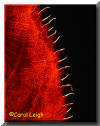
'Tis the Season:
PHOTOGRAPHING
FALL COLOR
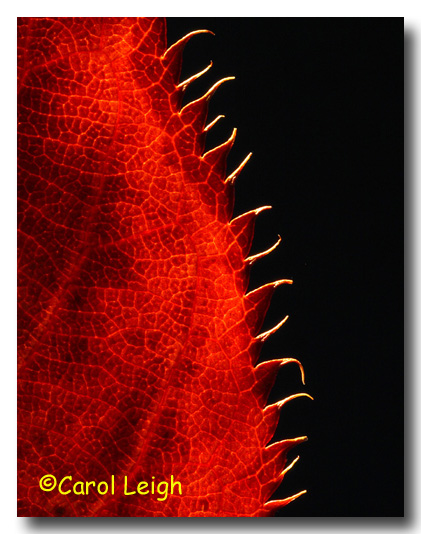
You don't need to travel far to
take photos that SCREAM fall color. This lesson is designed to encourage
you to look around with new eyes to begin building a portfolio of images
revolving around this exciting change of seasons.
 Lesson
#2 Lesson
#2
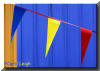
Back to Basics:
WORKING WITH
PRIMARY COLORS
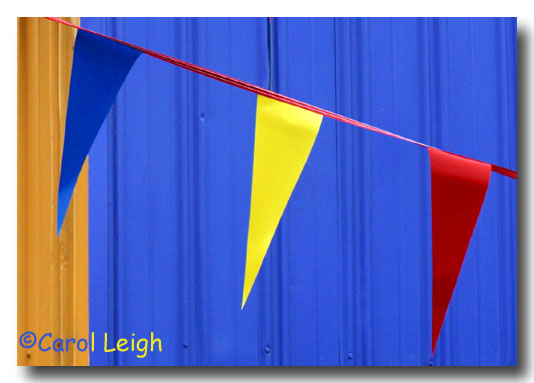
Here's where all other colors
begin — with red, blue, and yellow. This lesson is designed to increase
your awareness of primary colors and learn how to use and combine them for
colorful, exciting photographs.
 Lesson #3 Lesson #3
Test of Patience:
PHOTOGRAPHING
DOGS & CATS
All the basics of wild animal
photography come into play as we learn to take better photos of our pets,
our neighbor's pets, or random encounters with pets on the loose. Learn
how to look at and analyze lighting, compose instantaneously, while trying
to photograph animals who might not be the most cooperative of subjects.
 Lesson #4 Lesson #4
No Time for Nachos:
PHOTOGRAPHING AT
TWILIGHT
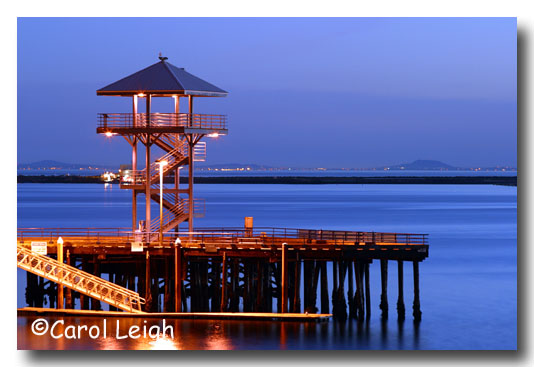
Even the most mundane subjects
take on an air of mystery at twilight — a time of day when lots of
photographers are enjoying nachos and margaritas instead of capturing this
magical light. We'll talk about exposure, composition, metering, personal
safety and more in this lesson.
 Lesson #5 Lesson #5
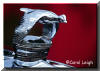
Hot Rod Lincoln:
CAR ART
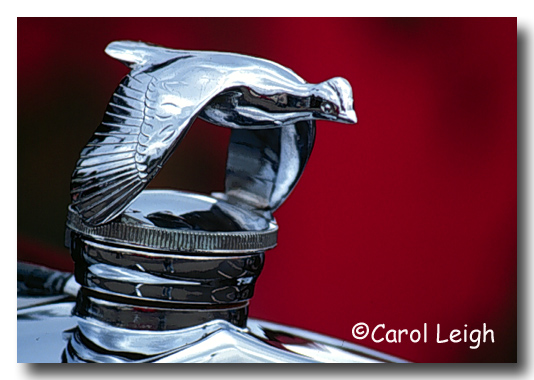
One of the first photo essays I
sold to a magazine was about antique cars. Not photos of entire cars, but
photos of bits and pieces — a sweep of chrome here, a slash of color
there, a gleaming hood ornament — parts of cars that are small works of
art in and of themselves. We'll talk about technique, exposure, things to
watch for, and little tricks to make your photographs simple but stunning.
 Lesson #6 Lesson #6
Sensuality and Sinuosity:
ENHANCING YOUR
COMPOSITIONS WITH S-CURVES
How often have you hiked a path
and, tired, decided you'll turn back just after you see what's around the
next bend, and then the next bend and . . . Those bends in the road catch
our eye, excite our imagination, and become interesting elements in our
photographs. The curve in a road, a river, a path becomes our subject du
jour. But if you can't find that, then check out the curve in your
computer's mouse cord, or these taco holders (left). By the end of the
lesson, you'll be finding S-curves all over the place.
|